Goodbye punishing optimization, it's time to wing it again
Collective effervescence via sports, de-optimization and why doing the most isn't always doing the best

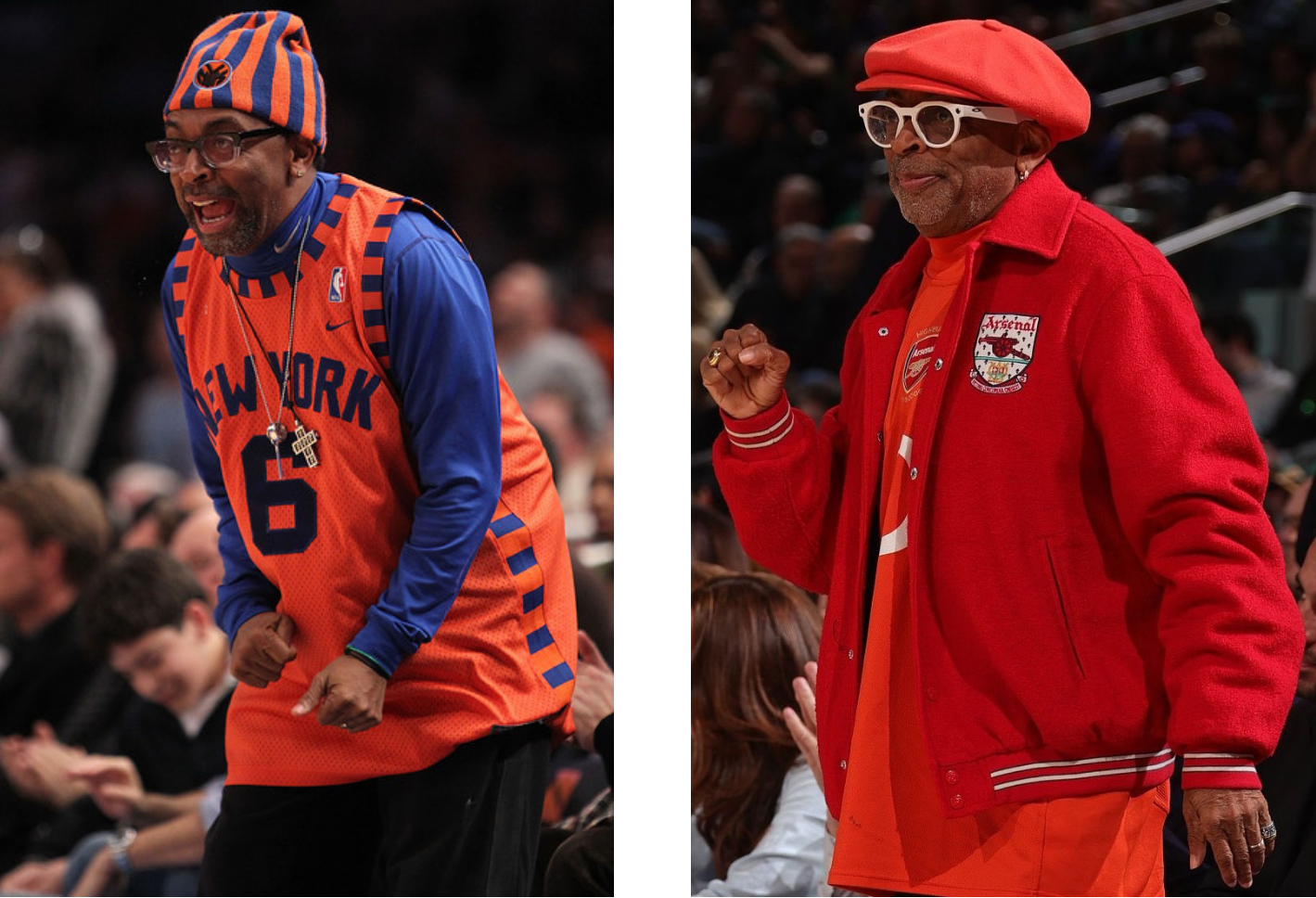
I spent the last half of May immersed in a red sea of shiny football shirts and sweaty faces, courtesy of the rabid Arsenal fans that descended on my neighbourhood (you can still hear a rogue victory cry most days). Despite my moaning when unusually hot days were accompanied by a surround sound of blaring horns and off key sing-shouting, it was all in all surprisingly fun - the buzzy atmosphere and communal spirit infectious (extending to helping clear the obscene amounts of rubbish for about two days after the parade).
Now there’s a similar collective effervescence in New York with the Knicks long awaited triumph. Anyone with tangential ties to the city has suddenly become a diehard supporter - and it seems all are welcome. I’ve always held the lofty belief that art would save humanity but maybe it’s sports…?
And we’ve rolled right into the World Cup. I hold little feelings of patriotism, flag waving having been co-opted by the far right. But the England team, the majority of whom have immigrant roots, are representing the country right and ignite such levels of joy I’m happy to have the shouting…and horns…recommence.
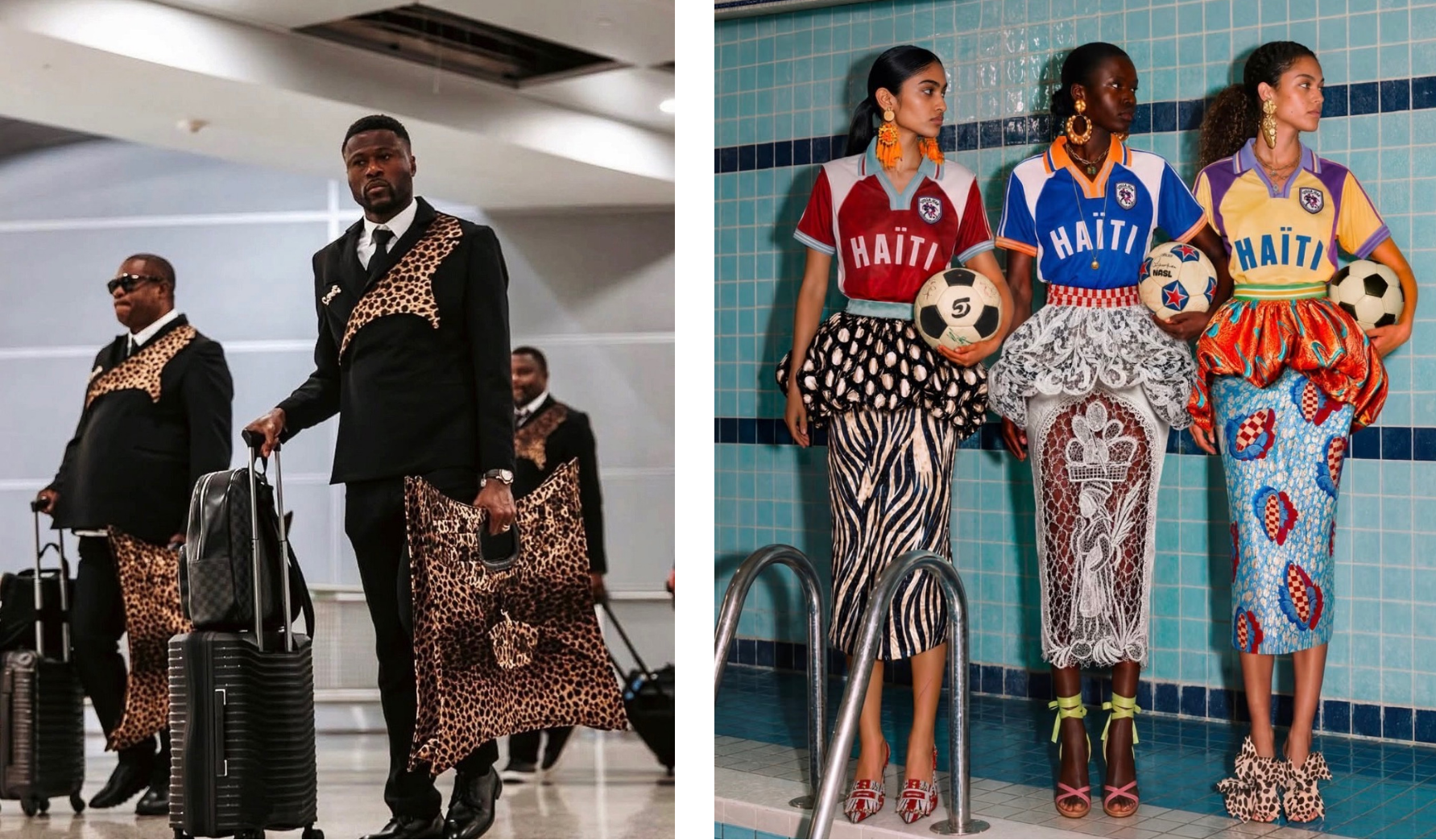
I loved some of the arrival fits, especially from the Congo and Cote D’Ivoire teams. On the pitch France’s Jacquemus x Nike collab gets top prize for their pinstripe kit this year and cheering from the sidelines Haitian-Italian designer Stella Jean went all out with a collection of vintage inspired looks to honor her heritage, celebrating Haiti’s return to the competition for the first time in 52 years.
Fashion & sport is one of my favourite performative unions, so much peacocking it fits right in with Pride month.
My own gym attire is decidedly less camera ready. A fitting descriptor would have eluded me until I saw the term ‘Pilates Gremlin’ included in a headline for the FT Style section and thought, it me. Where the rest of class is smartly clad in sleek lycra co-ord sets, I typically thrown on one of a rotation of oversized T-shirts which loudly announce that my interests lie outside of exercising: restaurant merch, niche movie quotes, Prince in a feather boa, a Francis Bacon painting of a man necking a pint (that one is probably most incongruous in a place of health and wellness). Now apparently looking like a hot mess is…hot? I like this less intimidating, come as you are/personality lead approach.
The unfettered celebrations of late feel congruent with the recent backlash against Diary of a CEO podcaster Steven Bartlett and the three glasses of wine that derailed his life. Though I really think we’ve reached our quota of men with microphones, this seems less about Bartlett specifically and more a rallying cry against optimization culture and the algorithmic, datafied prisons we’ve created for ourselves.
Two great books on Millennial existentialism
Oisin McKenna’s debut novel Evenings & Weekends, centered on the interwoven lives of a group of thirty-somethings living in London, whose relationships start to unravel over a sweltering weekend in June. It’s about forging and finding identity, with the characters navigating queerness, class systems and a sense of home, all muddled by the confounding, messy nature of love.
I followed this up with Sophie Hughes translation of Vincenzo Latronico’s Perfection, a viciously sardonic takedown of how the digital landscape has flattened culture. Protagonists Anna and Tom, a young couple from Southern Europe are living in Berlin, where they have constructed an “ideal” life for themselves. But it’s all based off aspirational 2D images and they are having trouble making it three dimensional, constantly chasing goals to match how it feels to how it looks. Bleakly funny, a good pick for a plane ride (-3 hours).
Travel, being displaced to a different physical (as opposed to virtual) reality is perhaps the best antidote to the slop economy. I’m fortunate to have gone on several incredible trips over the past couple of months - two birthday celebrations (40 is the new wedding and I am 100% here for it), a hotel opening in Florence and a long weekend in Tangier, my first time in Morocco.
The latter in particular rewired my brain a little, both in its being new to me and in challenging how I typically travel. I arrived with a to do/to see list and a certain preconception of what it would be like: a bustling city with remnants of the louche, interzone decades when it served as a bohemian enclave for beatniks (like many tryhard teens I was obsessed with William Burroughs’ Naked Lunch).
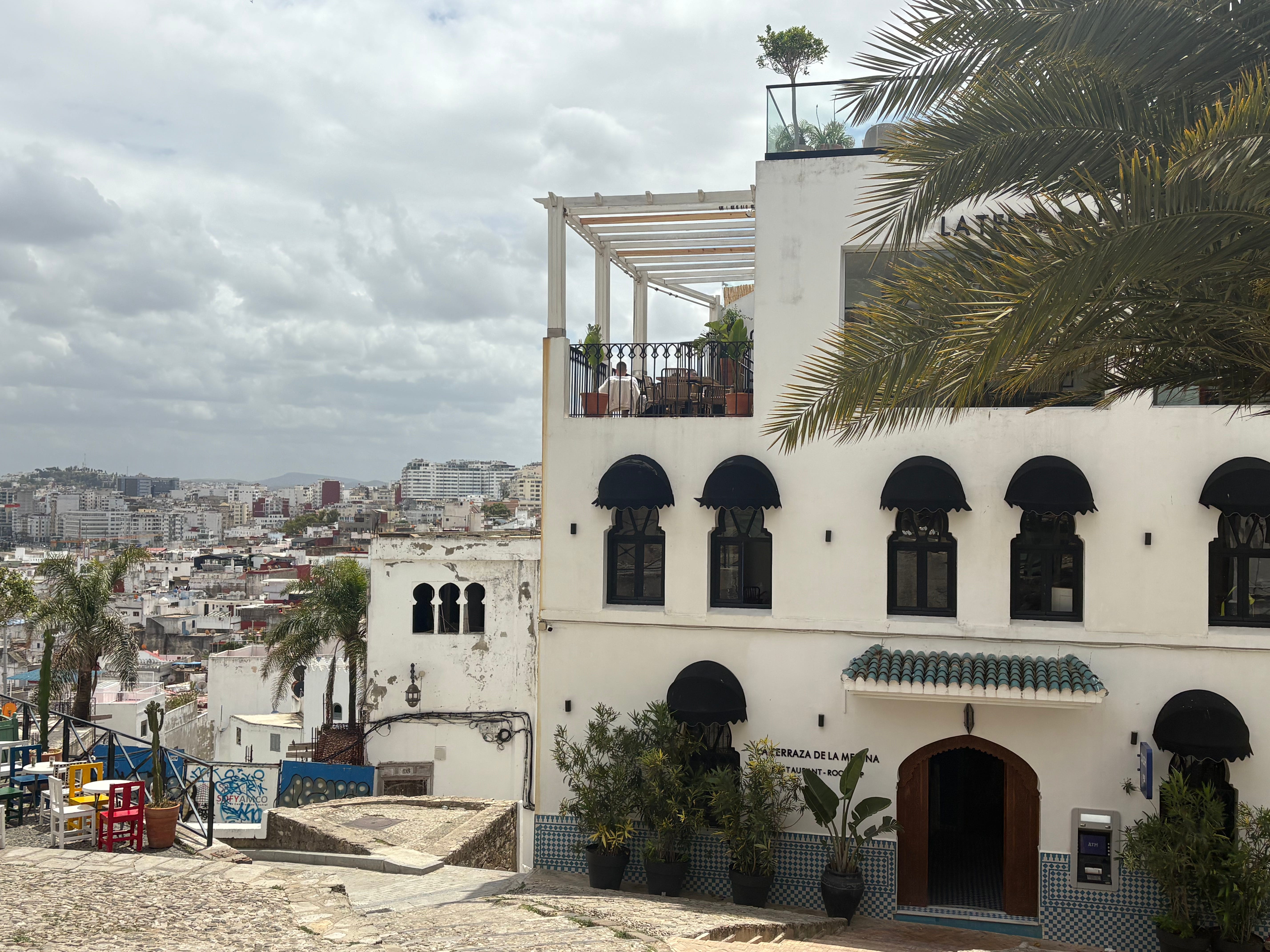
But a place cannot be contained within photographs or literature and Tangier’s history has been rewritten over and over. It was like nowhere I’d been before - and yet I walked around with this weird, almost constant feeling of deja vu. Lying on the edge of Africa, Europe and the Arabic world, it sits at the point where the Atlantic Ocean and Mediterranean Sea converge. Layered with all these European influences, it is still resolutely Moroccan. It’s impossible to get a handle on it in a couple of days - nor should you try (lesson learned).
Tangier is also not a place to rush, and in the labyrinthine medina you’re best to forget google maps - it will spit you out eventually. I have a feeling repeat trips are necessary for it to fully reveal itself.
Observations from a slower pace of travel:
When I’m away somewhere for only a short period I tend to prioritise as much time “on the ground” as possible, regardless of whether it’s my first or fifteenth visit. In doing so I’ve unintentionally developed my own version of travel maxxing, always slightly overdoing it. It’s borne out of enthusiasm rather than a checking of boxes, but it’s not just about how much you see of the location, it’s also how you inhabit it.
Why we like holiday homes more than our own
One of the things that makes vacation homes so appealing is that they’re not crammed full of the massive amounts of stuff we accumulate. You can have personality that’s eclectic rather than cluttered.
In Tangier we stayed at Villa Mabrouka, the former home of Yves Saint Laurent and his partner Jacques Berge, which was revamped in 2019 by Jasper Conran. He’s kept it close to the original design by Jacques Granges, minus a bit of chintz. It’s a beautiful fusion of time periods with the main house dating to the 1940s, set within a sprawling garden that contains over 6,500 plant varieties.
Echoing the city, the decor is predominantly white, punctuated every so often with strong but soothing colours. It illustrates how to create a feeling of serenity without it being too staid or clinical.
“Blue and green should never be seen”. Nothing I hate more than an archaic design rule, especially when it rhymes. While I do love a bit of contrast, tonal layering of shades in the same colour can look lush together, especially when playing off the surrounding environment. The juxtaposition of monochrome against turquoises and dusty blues, malachite and lime green works incredibly well - it’s both understated but still dramatic?


Simple pleasures
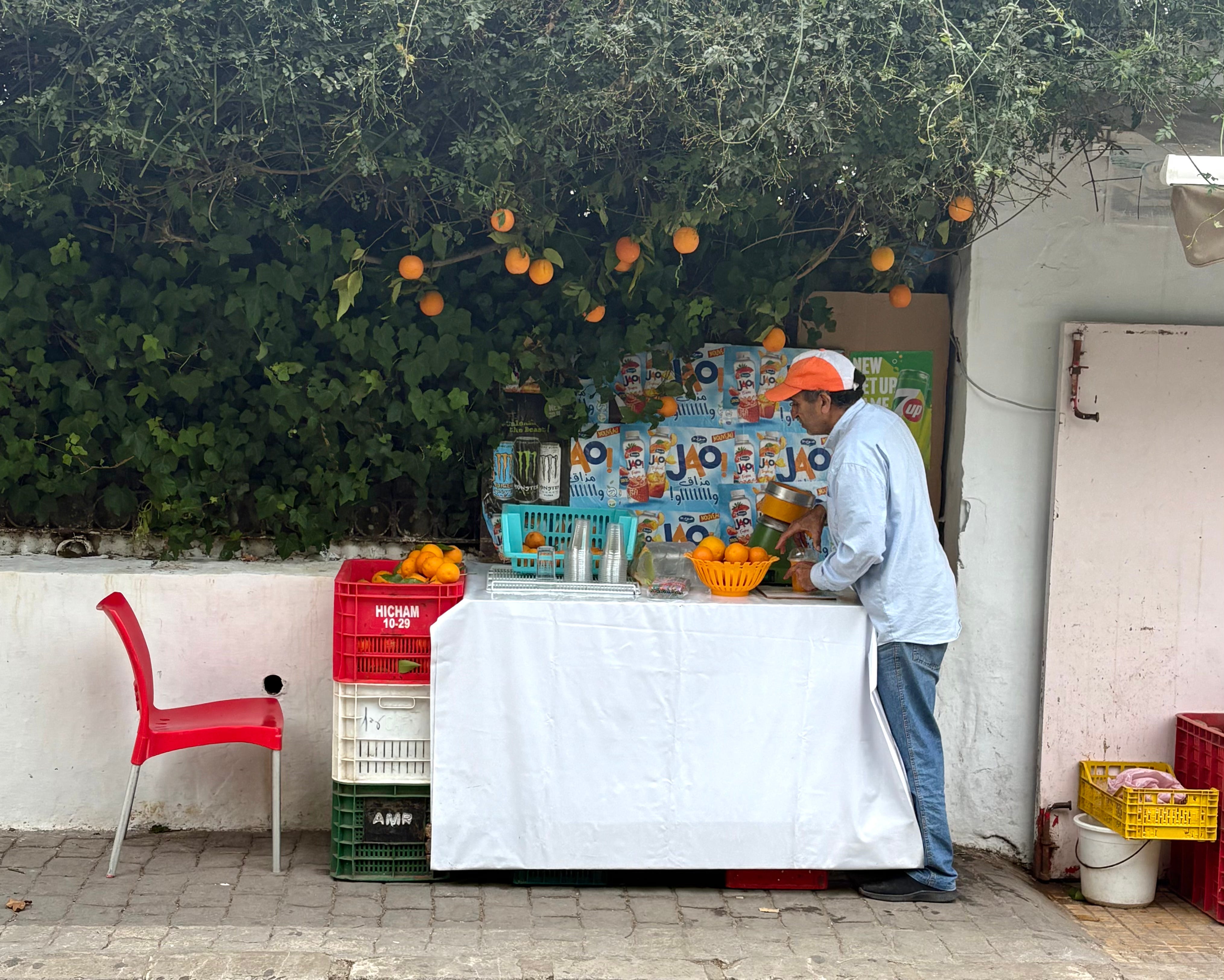
I’m usually always keen to try out the local contemporary food scene when travelling - open to whatever trad dish or discarded vegetable part has been deemed ripe for reinvention. But after dissociating while a waiter spent 20 minutes explaining each item on the menu, I have been finding myself leaning into simpler dining options whenever possible.
The best meal we had in Tangier was at Saveur de Poisson - a hole in the wall restaurant with no menu, just several delicious fish courses composed of whatever had been caught that morning. In Florence I went to old faithfuls, casual trattorias are still king - Sostanza (one of the few places I will order chicken) and Cammillo (do not send anything back or expect it returned cooked within an inch of its life, my dinner companion learned the hard way).
The undersung value of niche skills
In my quest to conquer small talk/cut through the bullshit questions, I’ve started asking people about the niche talent or skill they’d most like to have. While at Villa San Michele for its opening weekend I had the opportunity to learn about ancient artistic practices, getting a brief lesson on Scagiola, a technique that combines powdered gypsum with pigment to create faux marble. At the end I received a gorgeous hockey puck souvenir - too nice to use as a coaster?


I jumped at the chance to visit a restoration specialist and watch them at work in their studio off Santa Croce. Although it requires years of training and great precision re chemical application, the process was much more intuitive than I had imagined.
I’ve an unfounded, long held belief that this is something I would be good at (as in reviving originals, not going rogue ala the Ecce Homo fresco). I’m dexterous and sort of arty, plus it seems quite relaxing (?). If I’m honest with myself I would probably most enjoy the ego trip of being associated with an Old Master...


Rothko & the horizon line
I made time to swing by the Rothko exhibition that’s currently on at Palazzo Strozzi, with satellite displays at Museo di San Marco and the Laurentian Medici Library.
I’d only ever viewed his work in larger, contemporary spaces and it was special to see them in a different setting, his Colour Fields placed to mimic the proportions of the Renaissance architecture. With the lighting dimmed in the palazzo it felt more intimate, the paintings more impactful. Rothko always insisted they be hung low to the ground, in order for the viewer to experience a sense of full immersion.
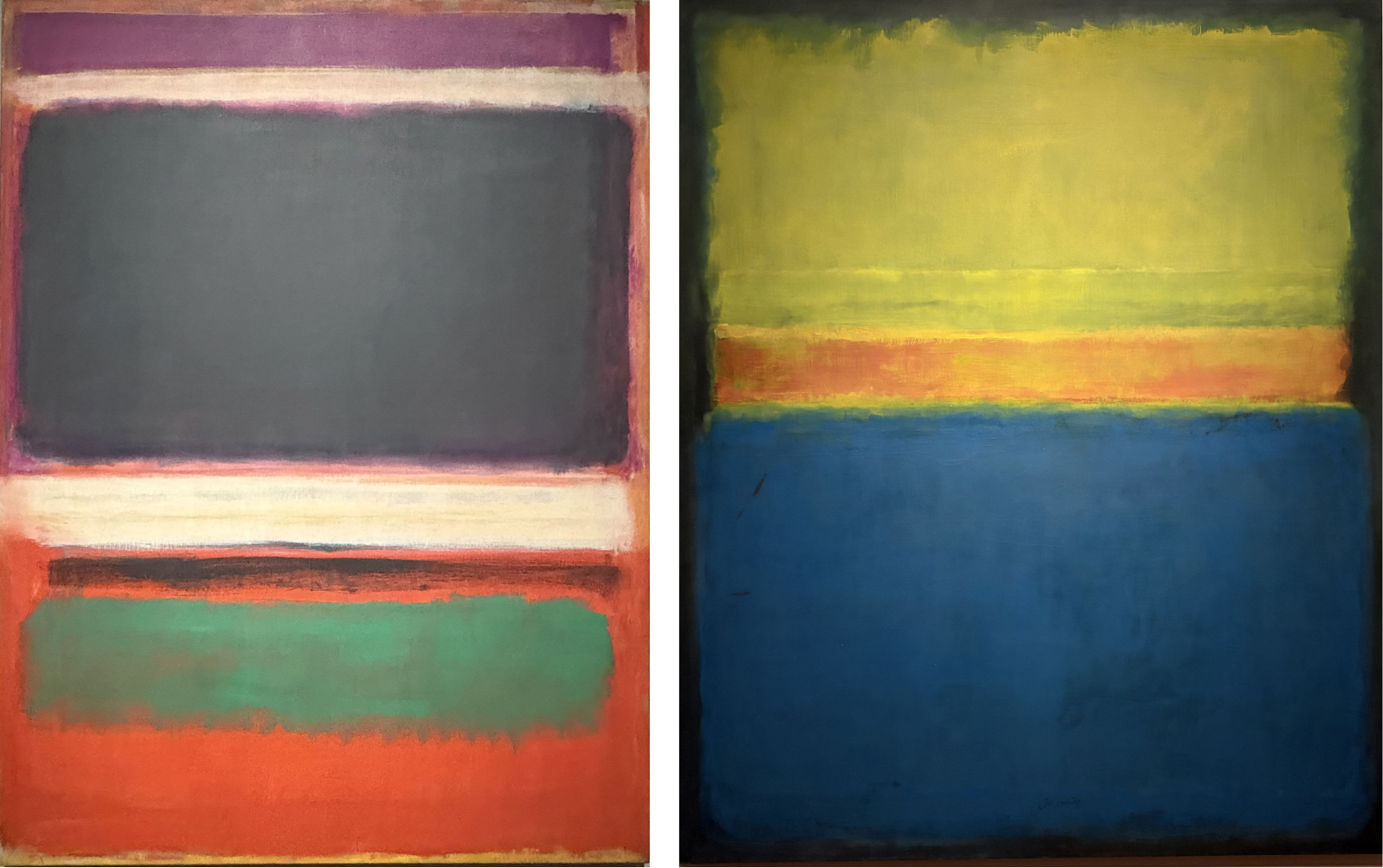
I’ve been thinking about the meditative aspect of his “horizon” lines, of horizon lines in general. On the footpaths that line the northernmost edge of Tangier you’d find people sitting on plastic chairs at all times of day, chatting and sipping tea, looking out to where the sky meets the sea. Younger me might have thought this boring and two dimensional, but now I don’t see it as flat, rather as unending, limitless potential.