
Good Vibes Only
Channelling the essence of the season - connecting through nature, culture and finding people to root for.

European cities are noisy in June/July - the sound of music, animated chatter and clinking glasses, balls being hit, kicked, throw around. Everything is live - an abundance of festivals, sports matches, carnivals, creepy crawlies getting into pints and picnics. People - and bugs - are out and making the most of it.
The buzz is infectious, fields filled with kids’ sports days and concerts - the soft din of chants and sing-a-longs emanating from parks and stadiums throughout London. Witnessing the camaraderie at the Wimbledon men’s final was almost as enjoyable as the match itself - regardless of who anyone was rooting for no one left the pub downcast (I’m all for some dramatic flair but a tennis smashing tantrum is not what anyone is feeling right now).
When the Lionesses made it to penalties last night in a mad volte-face of a game against Sweden, I went across the street to my local where there were as many men as women watching the screen in anticipation - the win resulting in a celebratory roar disproportionate to how well they played. *It feels very English to celebrate more when winning by a tiny margin than when doing so by a lot…
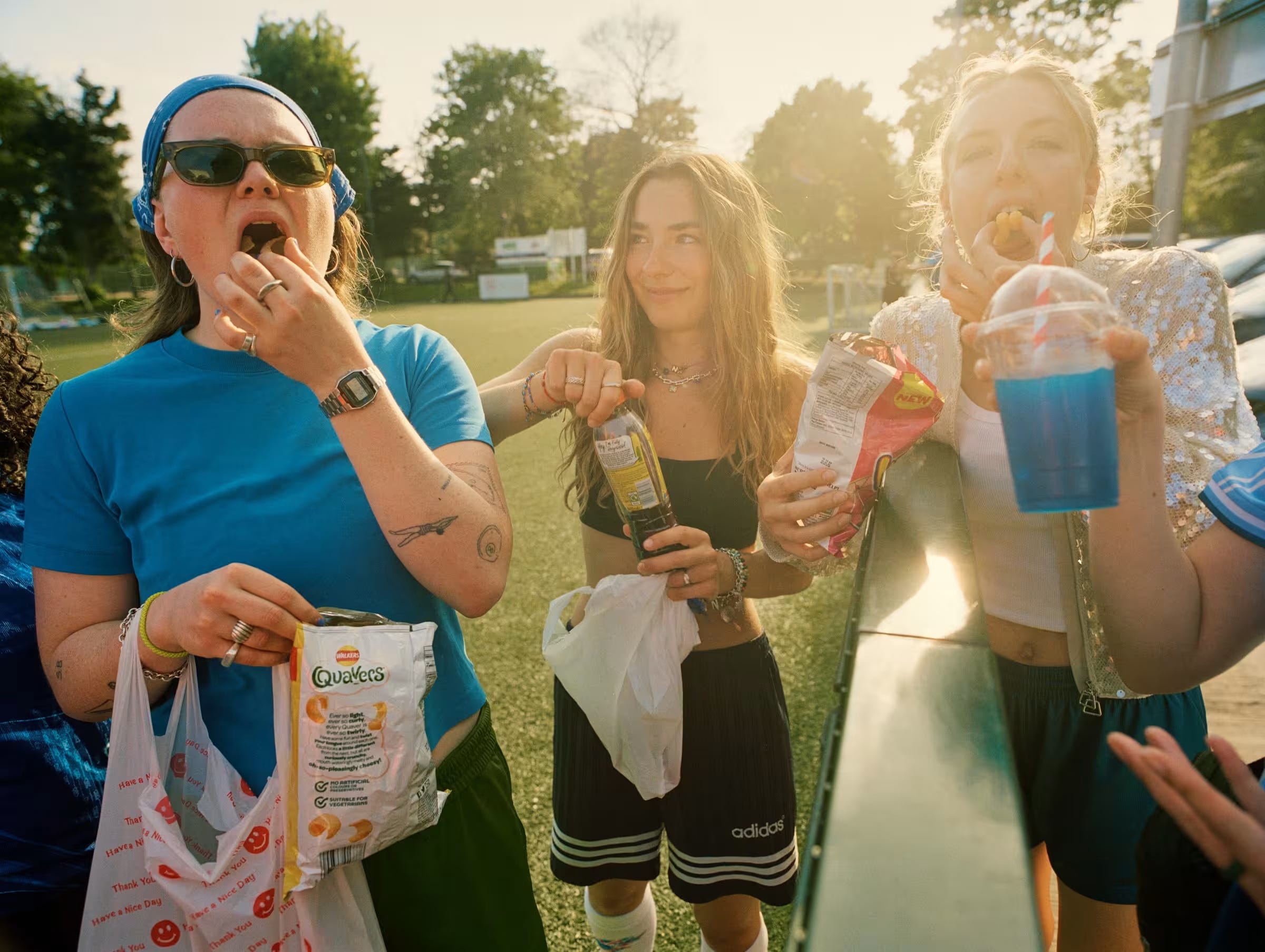
The growing support for women’s football - for women’s sport in general which is dominating this summer with the Euros and Rugby World Cup - has been so heartening to see. Where once it received little coverage the media blitz has been amazing - even Vogue now has a dedicated Sports Desk. It’s inspired a whole new network of players - I loved this article in the FT last weekend. But it’s also inspired a whole new audience, one that is way more inclusive across age and gender. Though I will whine forever about the never-ending roster of events at Emirates stadium clogging the tube station, seeing little boys and girls with their parents and grandparents on the way to an Arsenal Women’s match does kind of make up for it.
A band, a sports team, a tv show - ok Love Island may be brain rot but it’s a chance to find common ground - any time we can come together and cheer people on right now we should embrace it.
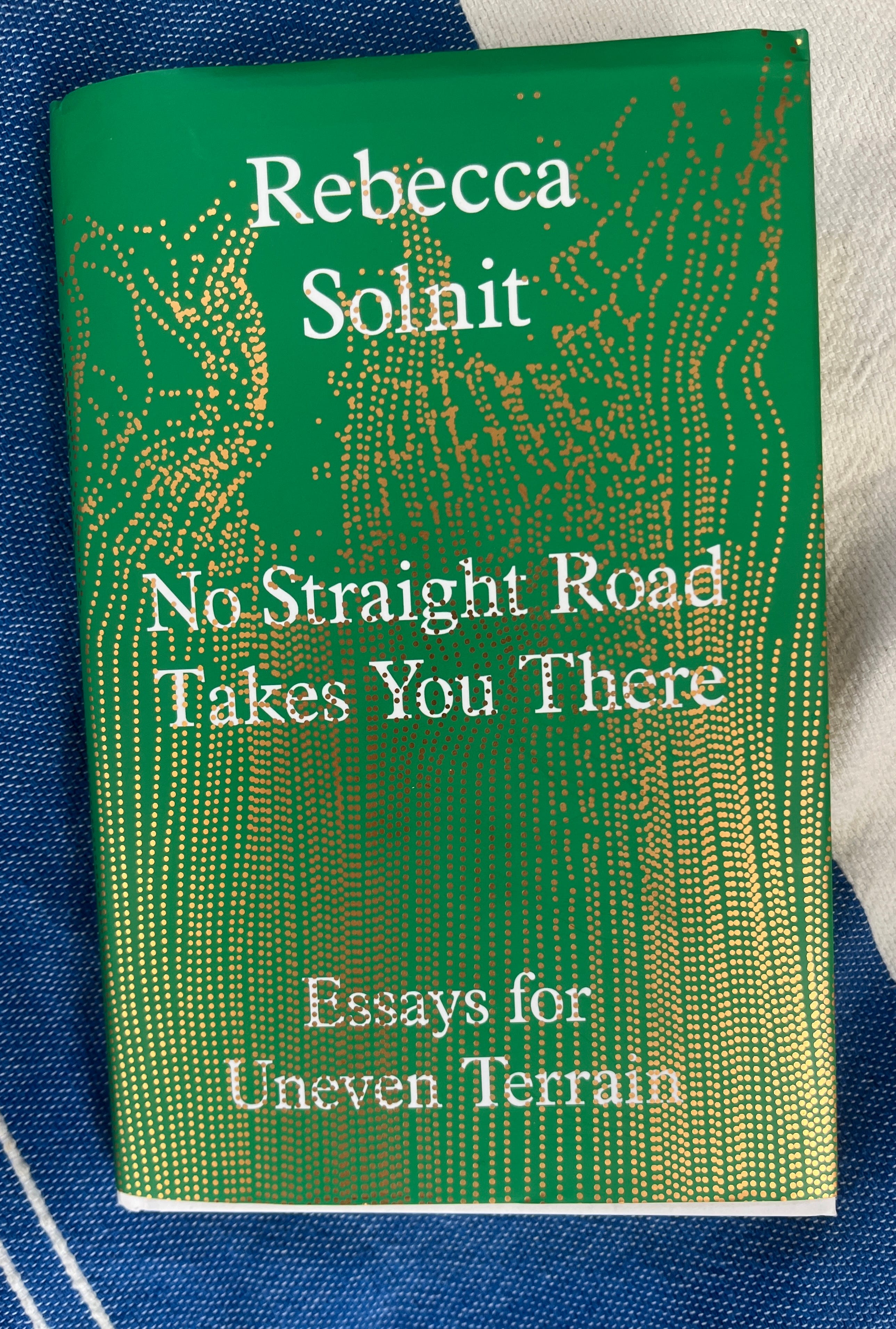
The dark side to these sunnier days has been making itself more apparent than ever as of late. I have found reassurance in Rebecca Solnit’s No Straight Road Takes You There, a collection of essays in which she presents a not completely dire outlook on the range of crises we are facing, with several entries devoted to climate change. Her more encouraging perspective comes from the knowledge that progress isn’t always predictable or linear and that indirect actions - big or small - can have real consequences.
Solnit’s writing is somehow both poetic and logical - hope when grounded in evidence doesn’t seem too lofty or idealistic. She sees it less as a passive state than one that is actionable:
“We must have landmarks and dreams ahead of us to orient ourselves, to remember that it has been different and could be different. We must have a vision of what our toil is for and how we will know when we get there”.
The essay “Changing the Climate Story” cautions against resignation, underlining the importance of narrative in finding “stories of a livable future”.
Against growing societal isolationism, she emphasizes the importance in seeing everything as connected, both as a scientific fact but also as a psychological and emotional reality. Nowhere is this more evident than after a natural disaster - we need to extend that sense of urgency, solidarity and empathy to aid in prevention rather than just recovery.
Poetics of Relations - Black Artists getting recognition
Ahead of a major overhaul starting this September, the Pompidou staged its last major show - Paris Noir - an attempt to fill a large gap in the country’s record of art history. Though Paris is well known as having been a haven for Black artists in the early 20th century, the city hasn’t been as forthcoming in championing their work and cultural contribution. This final exhibition aimed to serve as a wakeup call to other institutions and to signal a commitment to a fuller history of global art upon its reopening in 2030 - the museum acquired more than fifty of the paintings on display.


It was overwhelming in the best way - a labyrinth of African, African American and African Caribbean art organized around a central space that acted as a metaphor for the Black Atlantic - what the late poet Edouard Glissant termed the “Tout-Monde”/ “All-World”.
His philosophy of interconnectivity stemmed from his upbringing in Martinique - island living meant encountering and being influenced by the culture of neighbouring islands and continents while still maintaining a singular identity. Glissant believed that small shifts on one side of the world could have a significant effect on the other. He was clear to separate globalization from homogeneity, instead asserting that an individual alternity can exist:
“I can change through exchanging with others, without losing or diluting my sense of self.”
That this documentary is still in cinemas over two months past its initial release shows that people are engaged with environmental concerns - rarely does a documentary hang around this long. Attenborough’s plea to protect our oceans from overfishing - specifically the devastating impact of bottom trawling - seems to have had a significant effect, raising awareness ahead of the UN Ocean Conference last month. The High Seas Treaty, which will establish 30% of the ocean as protected area (currently only 3% is covered) has been ratified by 50 countries, with the UK committing to passing legislation later this year (60 in total is needed for it to come into force).
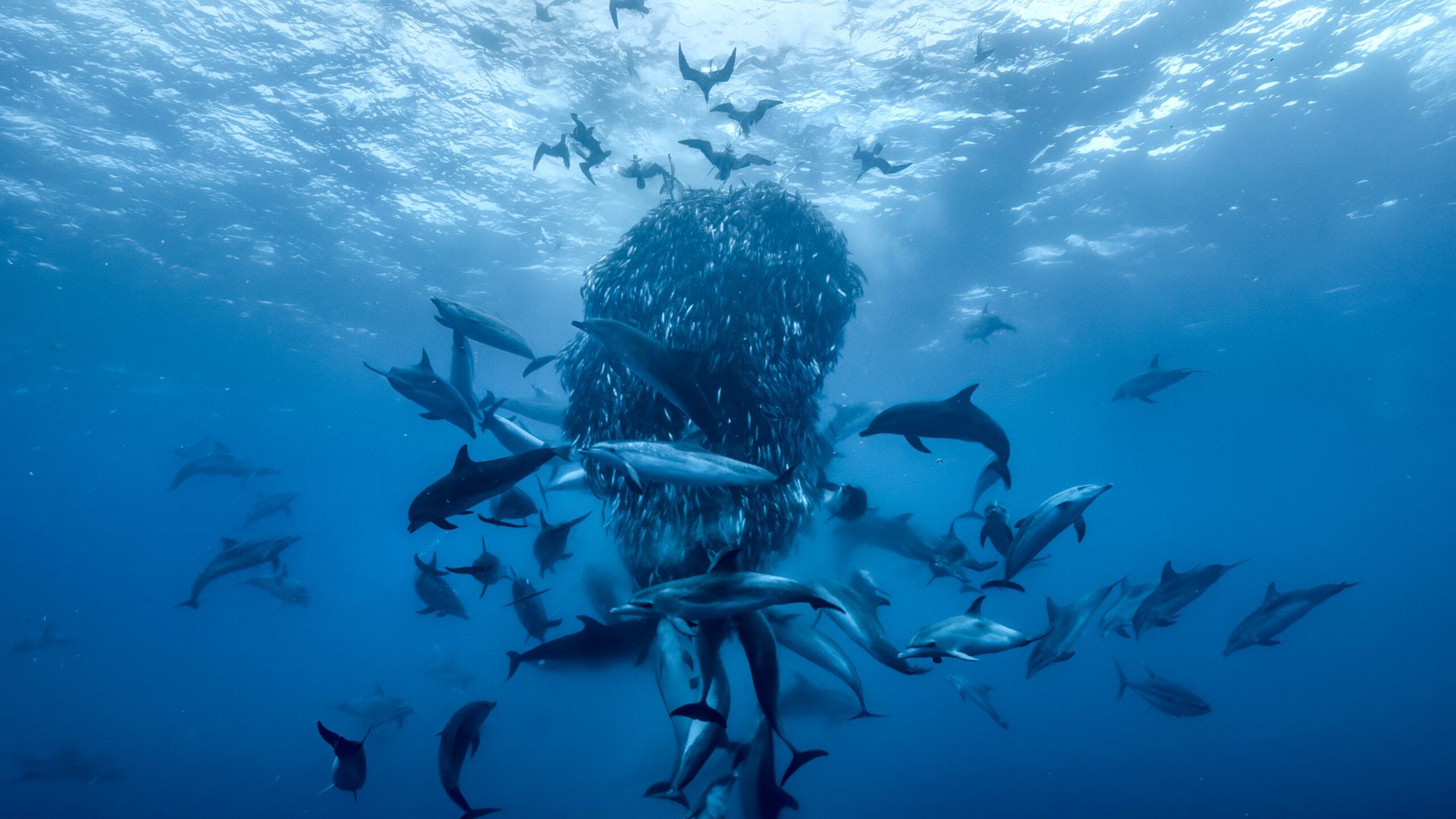
Unsurprisingly the footage is spectacular - time lapses of marine life in all its weird and wild shapes and colours are like something out of an acid trip - proving nature superior to any CGI. In making the documentary it was uncovered just how much the world below sea level affects that above it, how dependent the climate/humans are on its health. Though the amount of damage shown is stark, it’s juxtaposed with the miraculous discovery that the ocean floor is able to regenerate quicker than ever thought possible. All we have to do is leave it alone…
Available to stream on Disney+ and Hulu.
A redesign for the £ note
Could Attenborough’s national treasure status be cemented beyond his film catalogue? The Bank of England is redesigning pound notes for the first time since 1970 and is calling on the public for suggestions - D.A.’s name has been circulating. While I fully support this I’d also like to throw in the Beckhams, a fox - they are going to be 1:1 with humans at this rate, Helen Mirren as the Queen - just to mess with everyone? Really how much longer are we going to be using cash anyway…
You can submit your ideas here up until the 31st of July.
Art in Nature at Chateau la Coste
At the end of June during a 48 hour stop over in Provence I was lucky enough to visit Chateau La Coste, the biodynamic winery and sculpture park that sits on a 600 acre estate near Aix. Despite scorching temps restricting movement (the walk around the grounds is meant to take approx. 2 hours, I did it in about 4…) it was absolutely worth the trip - the art and landscape so inspiring that I could still feel my serotonin levels rise even as I was sweating through my eyeballs.


Highlights for me included Andy Goldsworthy’s “Oakroom”, Frank Gehry’s Music Pavilion and Tadao Ando’s chapel, as well as the interactive installations by Sophie Calle and Yoko Ono - where visitors are invited to write down their secrets and wishes, to then be buried in the ground and hung on trees. Nothing like 37°C to bring out your most vulnerable side.
There was more levity in Calle’s visiting exhibition “Chasse Gardee” at the Richard Rogers gallery. Inspired by personal ads from an old hunting magazine, she began to investigate the evolution of desire through the past 125 years. Placing old marriage proposals and more recent dating profiles alongside images of wild animals she makes the direct comparison of hunting to dating - showing just how much we have in common with the natural world. In a preview of the exhibit for Wallpaper Magazine she condensed some of the main qualities sought by men and women over the decades:
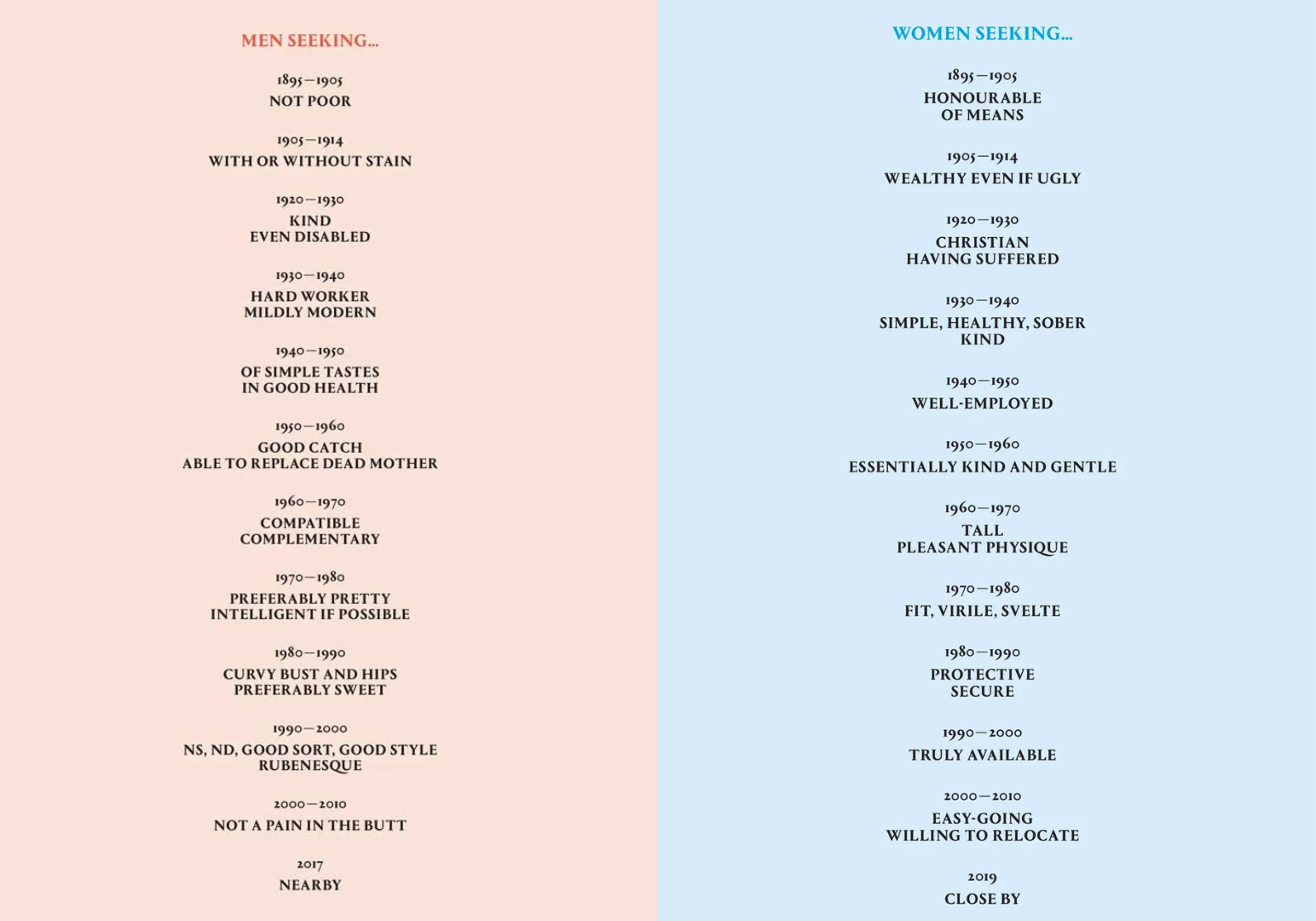
Less a positive spin on collectivism…more like collective trauma? But too funny for me not to include.
My favourite installation was Prune Nourry’s Mater Earth, an immersive twenty-seven metre long sculpture of a reclining pregnant woman shown emerging from the ground. Different body parts expose themselves depending on your position within the park - her entirety revealed only as you near the end of the walk. Stepping inside the sculpture, a feeling of discombobulation soon gave way to tranquility - the overhead fractured glass casting a light that mirrored human veins - or tree roots.
Though only installed in 2022 she appears as if she has always been there. In respect to the site Calle and her team used entirely sustainable materials, including a protective layer of ash - a method of preservation employed by the Romans. By connecting her to the original mother - Earth - Pourry makes the allusion to the creation cycle that women have been propelling for hundreds of thousands of years - I found it quite moving.
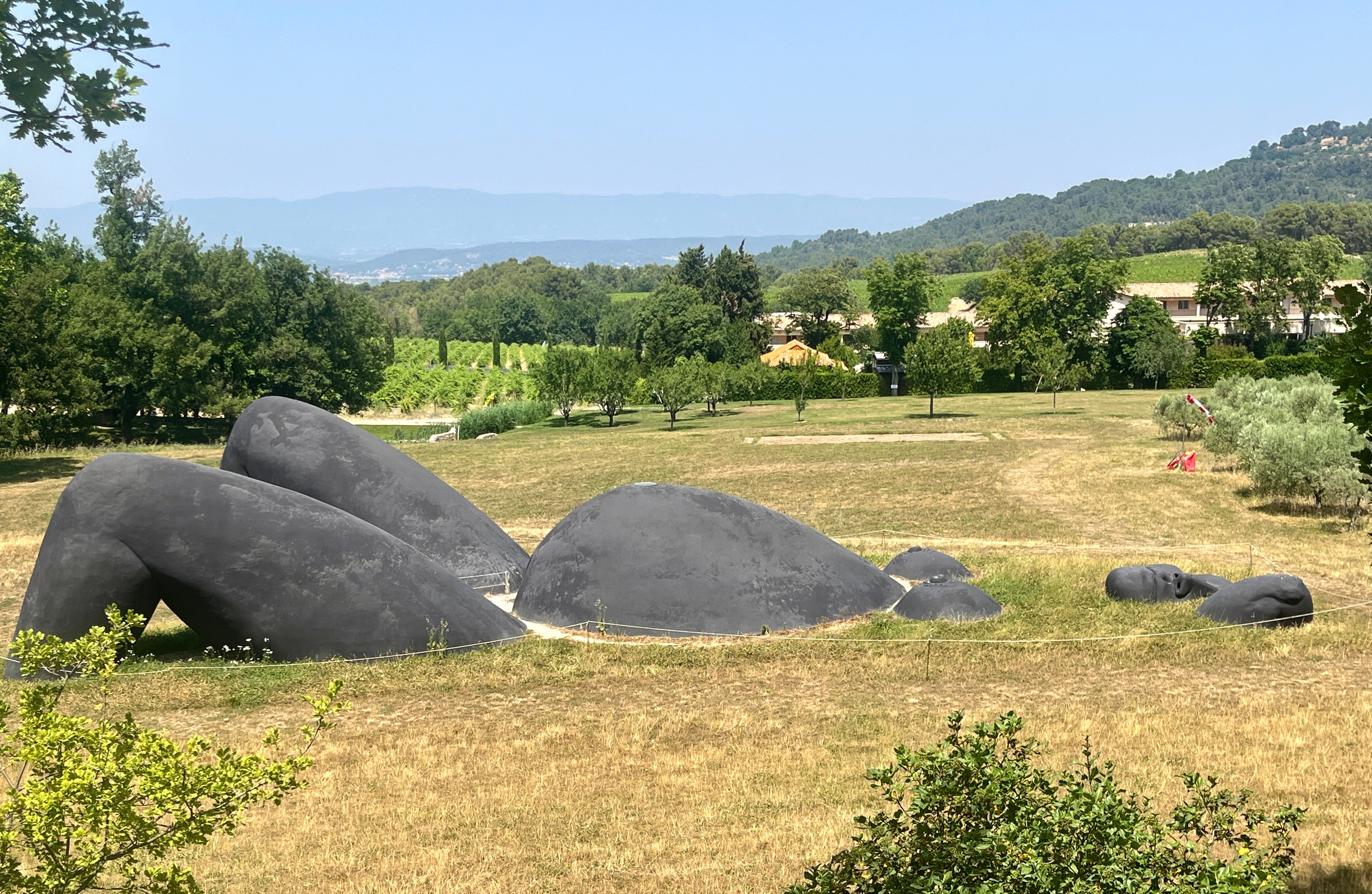
A delicious rose tasting really capped off the incredible if slightly arduous trek. I can’t wait to return - next time in Autumn.
Gisele Pelicot’s Legacy
Rebecca Solnit’s point in regard to reworking storytelling feels salient on any number of issues - not to damp down the severity of our very real, frightening problems but in order to conceive of a path forward - that for any setback there are still consistent wins happening. It was announced this week that Gisele Pelicot is to receive the Legion d’Honneur, an award of the highest national honor in France. Less than a year ago she was to the public a pitied, largely faceless victim, and while the crimes she suffered are no less abhorrent today then they were then, she has become a hero who will have changed the culture of the country forever.
"Good catch. Able to replace dead mother".....sigh
Your description of Château La Coste sounds amazing! It’s now on my bucket list.